Pricks for pricks who love pricks.
An unlikely solution to reducing stigma.

Sometimes it's okay to be a prick.
Hepatitis C is easily treatable. It’s free, quick, and easy in Canada. But treatment is only available for those who get tested.
The problem is… people aren’t. 1 in 25 gbMSM (Gay, Bisexual, and other Men Who Have Sex with Men) have had a hep C infection. We needed them to realize these infections are something that can happen to anyone, including themselves and their sex partners.
There’s a stigma around hep C. Many people (falsely) believe that it is mainly spread by people who use drugs. This made it hard to shift attitudes with facts alone.
We needed to find a different way to reduce the stigma.
Services
- Strategy
- PINPOINT: Message testing (English)
- PINPOINT: Creative testing (French)
- Photo shoot
- Graphic ads
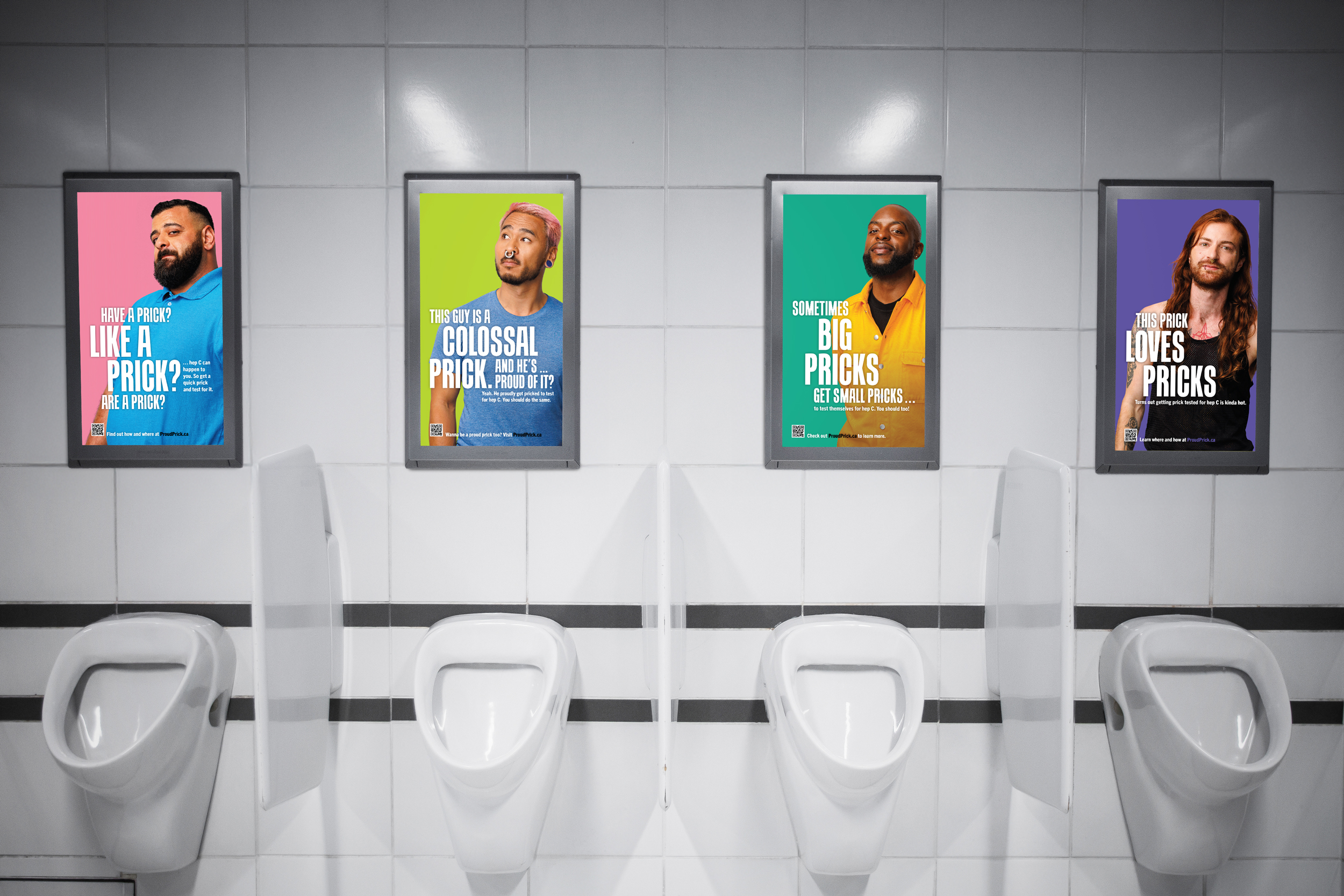
- Out-of-home ads
- Simple video
- PINPOINT: Strategic targeting
- Media buying
- Website
- Bilingual
A different approach to health messaging.
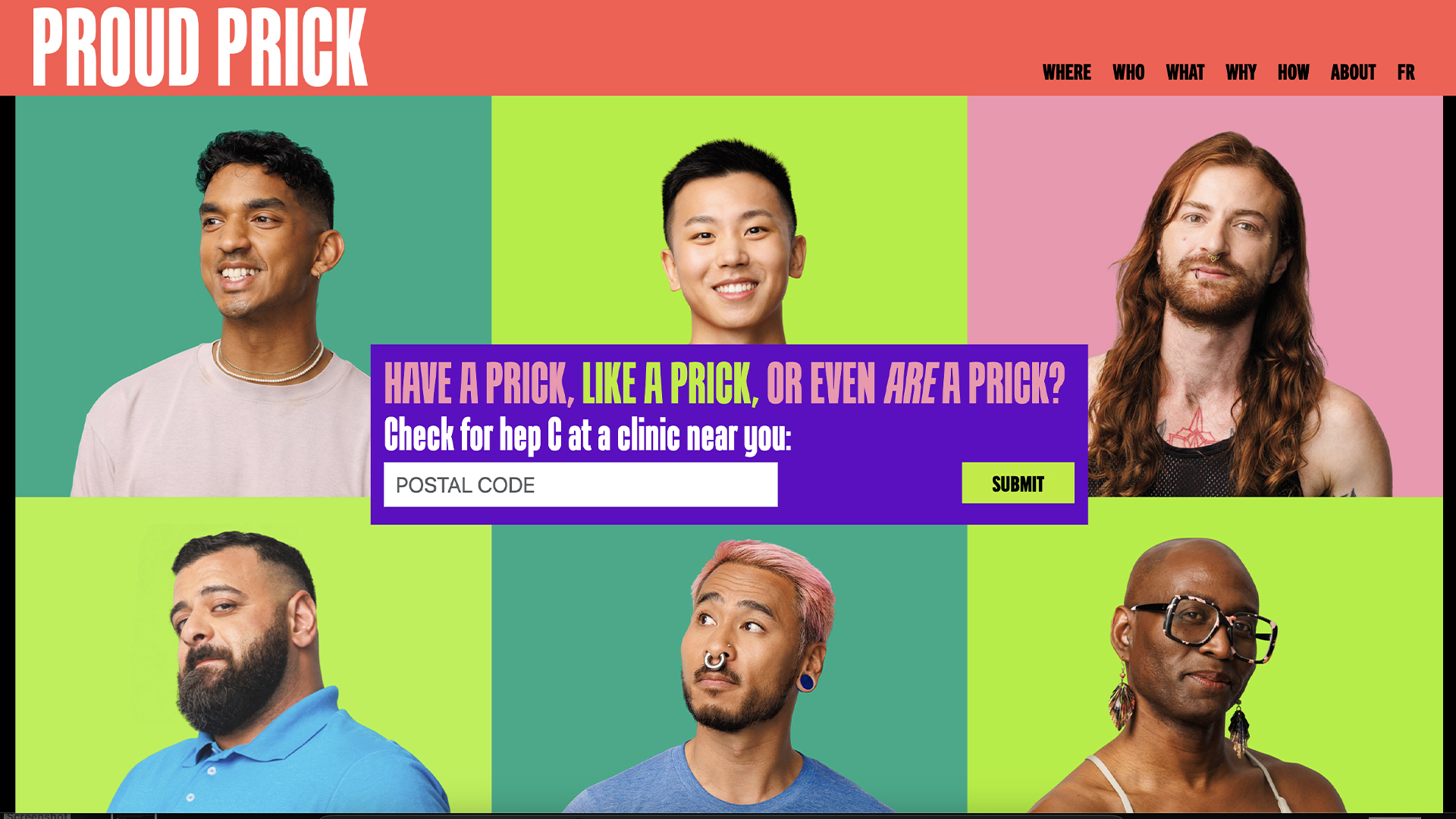
We started with a clever word play idea: Proud Pricks.
Have a prick? Like a prick? Are a prick? Get a prick.
A funny concept that could catch anyone’s eye. But we still needed an underlying angle. There were so many different ways we could go to convince folks to get tested—testing as self-care, an easy cure, hep C being super common. They all felt they could work… but we needed to find the right message that would resonate the most with our audience.
Backing up risky creative with Pinpoint.
We turned to Pinpoint, our data driven platform for testing insights. We discovered that the message that resonated the most with our audience was leaning into self-care. More than how easy the test was and how prevalent hep C was in the community, our audience was motivated by taking care of themselves and their health.
Instead of another simple and safe medical ad, we turned self care on its head by calling our target audience Pricks. We’re turned an insult into something to be proud of.
We not only knew our audience would get the joke, but we knew they would go out and get tested because of it. Pinpoint gave us confidence to take a big swing.
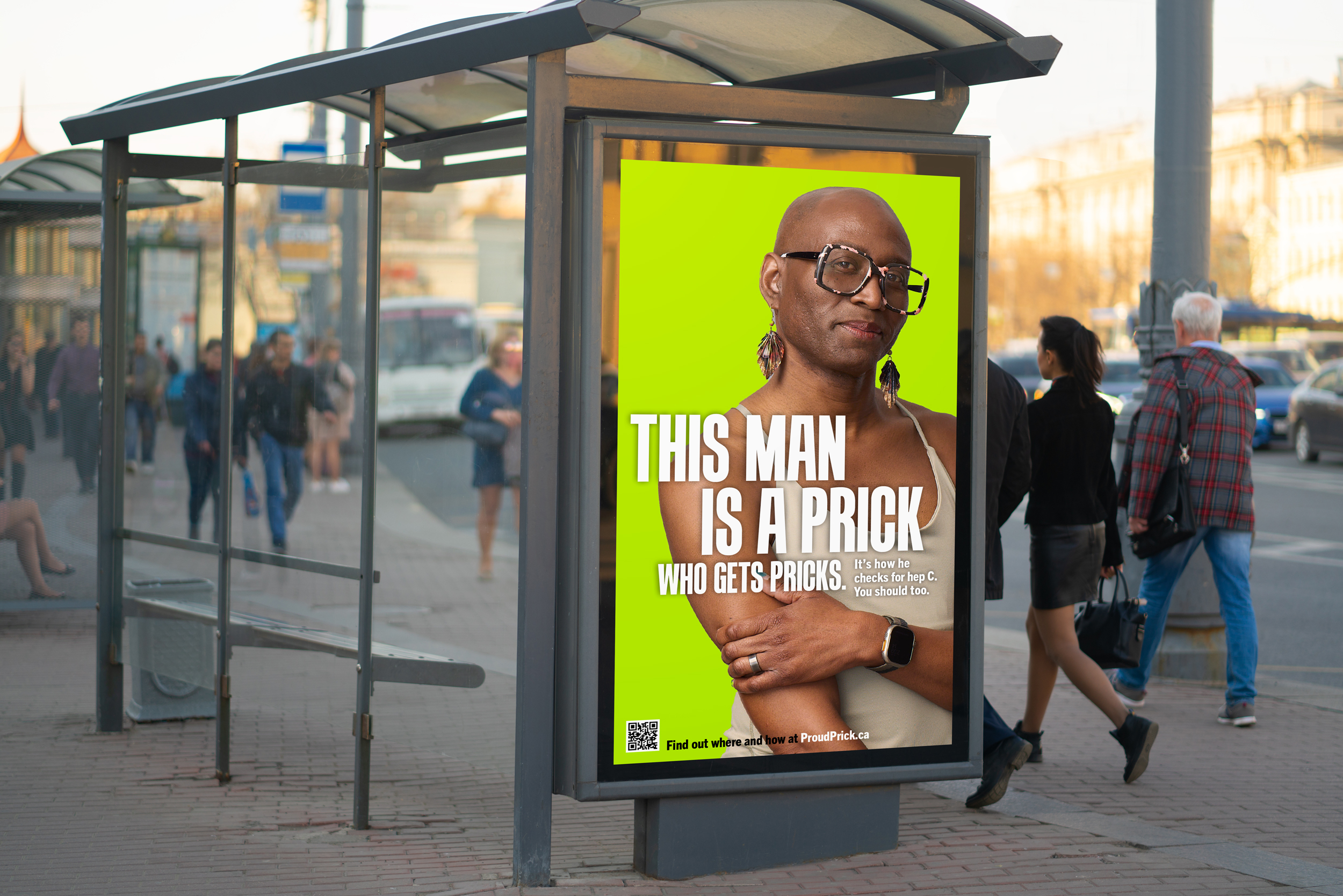
Not models. Real people.
Our audience didn’t see themselves in advertising targeted towards them. So instead of models, we hired actual community members and collaborated with them through the whole production process.
By subverting typical advertising with humour, we took a risk and created a more authentic, diverse campaign that actually represented our audience.


Finding their audience where they are.
We still needed to make sure that the audience actually saw it. We, again, turned to Pinpoint, this time with a focus on audience targeting.
While we did not want to hypersexualize a community that is too often subject to that in other media, we did recognize that sex itself is a unifying factor across a broad portion of the gbMSM community.
We leveraged this insight to build our ad targeting strategy that started from hook-up apps (Grindr, Jack’d, & Scruff) and geo-located spaces visited by gbMSM, such as bars and cruising spots. This allowed us to start the campaign where our target audience was already active online and in the real world.
Through Pinpoint’s mapping system we layered the geographic locations of these cruising locations on top of available out of home placements, to ensure that our audience was seeing our ads, regardless of their digital fingerprint.

We turned a few people into pricks.
Sometimes the solution to a serious problem is to go light hearted. Our approach, backed by Pinpoint, stood out from regular health advertising and invited the audience in.
We raised awareness with millions of people who didn’t know that hep C was something they should be aware of. Tens of thousands of people went to the website to learn more. We connected a thousand people with a place to get tested.
And, maybe we even saved lives.
ARE YOU Ready?
ARE YOU Ready?